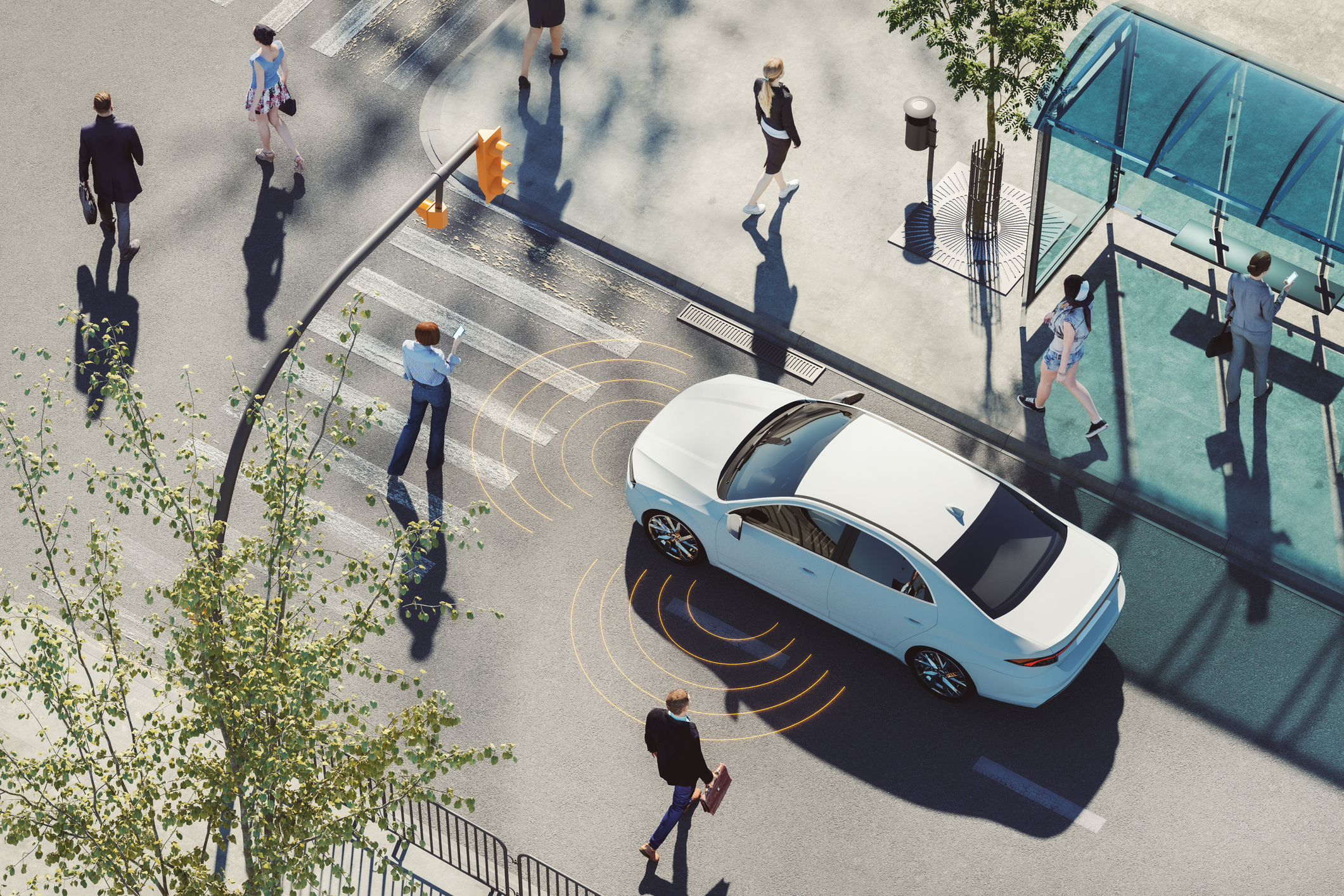
The future of transportation is arriving in New Jersey—and it’s driving itself. Earlier this month, Sen. Andrew Zwicker, D-16, introduced S-4702, legislation that would establish a pilot program for testing fully autonomous vehicles—AVs—across the Garden State. For insurance producers, this bill marks an interesting moment in the evolution of risk, liability and coverage in the auto insurance market.
Big picture
S-4702 would mandate the creation of a pilot program—administered by the New Jersey Motor Vehicle Commission in partnership with the Department of Transportation—to allow authorized testers to operate fully autonomous vehicles in both closed and open-road environments. The program would be overseen by a task force consisting of public safety officials, transportation experts, AV industry representatives, consumer advocates and insurance industry professionals.
Let’s get into the weeds
The legislation, if passed, would establish guidelines for several matters:
Authorization and oversight. Only autonomous vehicle testers approved by the MVC would be able to participate. The task force would report quarterly, solicit public feedback and help establish protocols for collisions, cyberattacks and liability.
Operator requirements. Operators would have to be in the driver’s seat, ready to assume manual control, properly trained and possess a valid driver’s license. They also must not be under the influence of drugs or alcohol.
Vehicle safety and data. All AVs would be required to have redundant safety systems, crash-avoidance technology, data recording capabilities and visible markers. Collisions would have to be reported to the MVC within 48 hours.
Commercial operations. AV taxis and commercial trucks would only operate on designated highways and must adhere to strict monitoring and override protocols. Platooning (groups of trucks operating in sync) would be permitted under specific conditions.
Infrastructure and funding, The DOT would develop new testing environments and work with local governments to invest in smart infrastructure, including sensor-equipped roads and real-time traffic management.
Reporting and rulemaking. After the pilot, a report recommending safe AV integration would need to be submitted to the governor and state Legislature. The MVC would establish rules to implement the program.
Insurance requirements and implications
Of particular interest to insurance agents and brokers is the bill’s approach to risk and liability.
To participate in the pilot program, autonomous vehicle testers would be required to register each AV with the commission and provide proof of liability insurance, self-insurance or a surety bond of at least $5 million to cover damages for bodily injury, death or property damage caused by the vehicle. The legislation also would empower the MVC’s chief administrator to prohibit AV operation if public safety is at risk or if compliance lapses occur.
The bill would mandate AVs to retain data recordings for at least 30 seconds preceding any collision, capturing operational factors like speed, steering, braking and system failures. This data could become crucial in claims investigations, liability determination and fraud prevention.
Timing
One unanswered question is the duration of the pilot program. The legislation includes references to both a 5-year duration and a 3-year duration. PIANJ is seeking clarification as to the intended timeline
The takeaway
While the days of autonomous vehicles roaming the Garden State may be years away, the introduction of S-4702 signals that the future of mobility in New Jersey is being shaped now.
PIANJ will continue to monitor this legislation and keep our members informed of important updates and implications as the pilot program progresses.

Bradford J. Lachut, Esq.
Bradford J. Lachut, Esq., joined PIA as government affairs counsel for the Government & Industry Affairs Department in 2012 and then, after a four-month leave, he returned to the association in 2018 as director of government & industry affairs responsible for all legal, government relations and insurance industry liaison programs for the five state associations. Prior to PIA, Brad worked as an attorney for Steven J. Baum PC, in Amherst, and as an associate attorney for the law office of James Morris in Buffalo. He also spent time serving as senior manager of government affairs as the Buffalo Niagara Partnership, a chamber of commerce serving the Buffalo, N.Y., region, his hometown. He received his juris doctorate from Buffalo Law School and his Bachelor of Science degree in Government and Politics from Utica College, Utica, N.Y. Brad is an active Mason and Shriner.