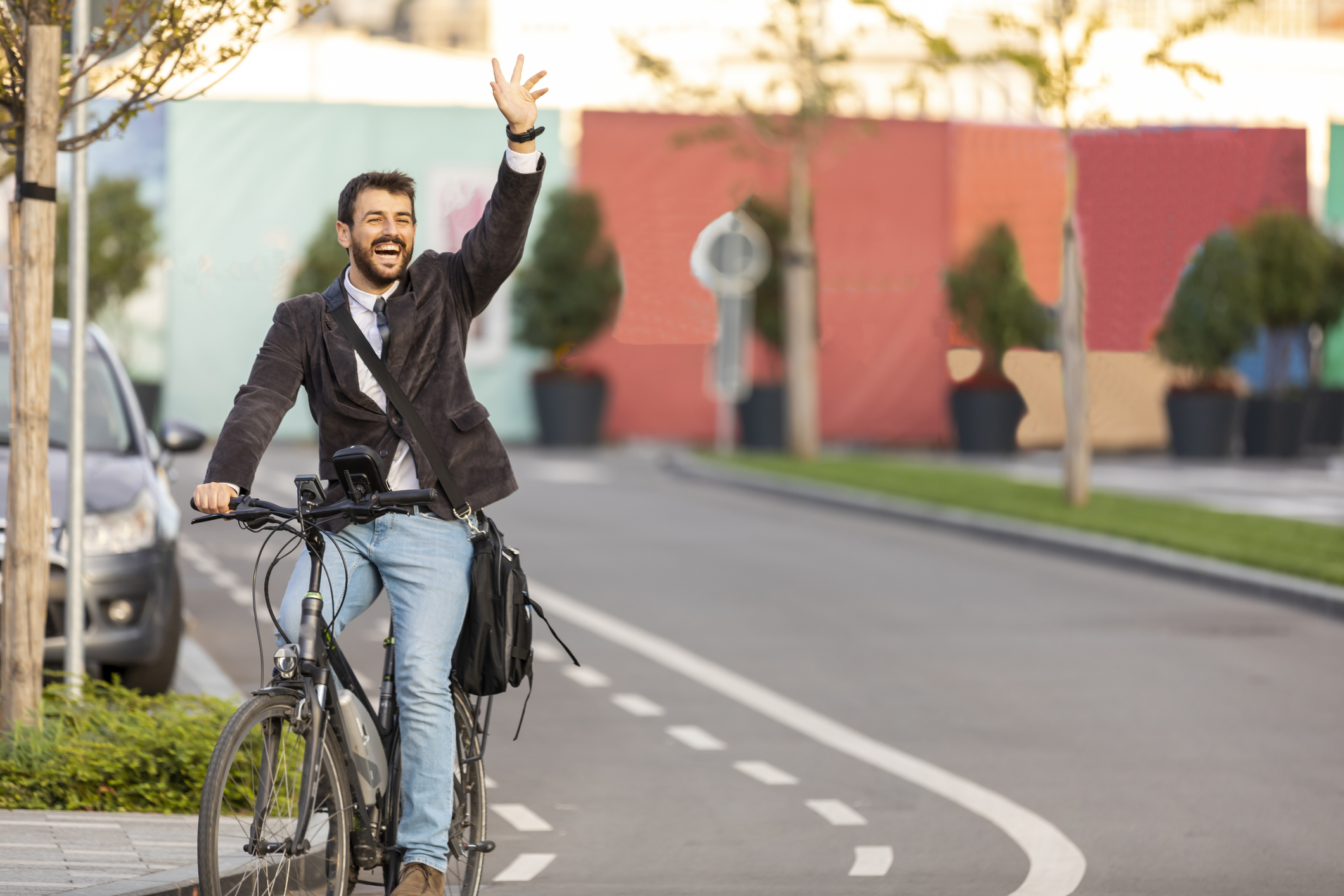
New Jersey has taken a major step forward to regulate the growing use of electric bicycles with the passage and signing of S-4834—a measure strongly supported by PIANJ.
As e-bikes have rapidly evolved from recreational novelties into legitimate transportation options, state law has struggled to keep pace. A top legislative priority for PIANJ, the law establishes long-needed insurance, licensing and registration requirements for certain classes of e-bikes, which addresses serious public safety and liability concerns that have grown alongside the vehicles’ surging popularity.
Today’s higher-powered e-bikes frequently operate less like traditional bicycles and more like motor vehicles—often traveling at higher speeds and sharing roadways with cars, pedestrians and cyclists.
These vehicles existed in a regulatory gray area that offered limited accountability and left injured parties, riders and insurers facing uncertainty when accidents occurred. The new law reflects a recognition that New Jersey’s regulatory framework needed to evolve to bring clarity, responsibility and common sense to a rapidly changing transportation landscape.
Why this matters
Until now, New Jersey riders of high-powered e-bikes—those capable of traveling more than 20 mph—could zip through city streets or suburban roads without needing to carry liability insurance, register their vehicles or even possess a driver’s licenses. This patchwork approach left significant gaps in protection for riders and pedestrians alike.
With accidents and injuries on the rise, this law creates accountability by requiring operators of certain e-bikes and motorized bicycles to carry insurance coverage—just as drivers of traditional motor vehicles must do.
What the law does
The legislation specifically targets “low-speed electric bicycles” and “motorized bicycles” as defined in the law. Key insurance-related provisions include:
Mandatory liability insurance. Riders of motorized bicycles and higher-powered e-bikes now must carry liability insurance to cover damages or injuries resulting from an accident.
Licensing and registration. Operators also must register these vehicles and obtain either a motorized bicycle permit or driver’s license. Riders who are under 17 years of age must have a motorized bicycle license; those over 17 years of age can use a standard license.
Insurance and license grace period. Recognizing the adjustment required, the law gives existing e-bike owners six months to obtain the necessary insurance, registration and licenses.
Shared e-bike exemption. Riders using municipal shared e-bikes are exempt from these requirements—provided they are at least 16 years old, and the fleet is registered properly by the company providing the e-bikes.
A closer look at the insurance requirements
One of the most important provisions in New Jersey’s new e-bike legislation is the mandatory liability insurance requirement for certain electric bicycles and motorized bicycles. This is a major shift that brings these vehicles more in line with how the state regulates motorcycles and mopeds—and for good reason.
The legislation doesn’t create an entirely new type of insurance policy for e-bikes. Instead, it integrates e-bike insurance into the existing personal auto insurance system. That means, liability insurance must meet the same minimum limits as those required for automobiles in New Jersey:
- $35,000 for bodily injury or death per person,
- $70,000 for total bodily injury or death per accident,
- $25,000 for property damage per accident.
- Uninsured/underinsured motorist coverage, unless waived.
The law states that—effective one year after enactment—all new or renewed standard auto policies must include these provisions for e-bikes and motorized bicycles when applicable. This ensures consistency and fairness in how coverage is applied across different classes of motorized vehicles operating in public spaces.
The case for insurance: Closing dangerous gaps
PIANJ has long advocated for these changes. In both states, micromobility vehicles like e-bikes and e-scooters have increased in popularity—but without a parallel framework to ensure liability and financial responsibility.
The risks aren’t hypothetical. The Consumer Product Safety Commission reported nearly 250,000 hospital Emergency Department visits and over 350 deaths nationwide between 2017-22 related to e-bike and e-scooter incidents.
Without insurance, accident victims often struggle to recover damages for medical bills or property loss. And operators—if found at fault for the accident—may find themselves personally on the hook for damages and medical expenses.
By treating higher-powered e-bikes more like motor vehicles, New Jersey ensures that riders are financially responsible for their actions—protecting everyone on the road.
What’s next?
The Motor Vehicle Commission has until mid-2026 to finalize and implement the registration process. For now, riders should start preparing to comply with the law, and agents should be ready to assist clients in understanding their new coverage needs.
PIANJ applauds the Legislature and outgoing Gov. Phil Murphy for taking this decisive action. This legislation brings clarity to a fast-evolving space, prioritizes safety and protects consumers and the public.
It’s exactly the kind of commonsense reform PIANJ was built to support.

Bradford J. Lachut, Esq.
Bradford J. Lachut, Esq., joined PIA as government affairs counsel for the Government & Industry Affairs Department in 2012 and then, after a four-month leave, he returned to the association in 2018 as director of government & industry affairs responsible for all legal, government relations and insurance industry liaison programs for the five state associations. Prior to PIA, Brad worked as an attorney for Steven J. Baum PC, in Amherst, and as an associate attorney for the law office of James Morris in Buffalo. He also spent time serving as senior manager of government affairs as the Buffalo Niagara Partnership, a chamber of commerce serving the Buffalo, N.Y., region, his hometown. He received his juris doctorate from Buffalo Law School and his Bachelor of Science degree in Government and Politics from Utica College, Utica, N.Y. Brad is an active Mason and Shriner.